Wednesday, 3 April 2019

Nature Verdant

For people all over the world, Costa Rica’s famed natural beauty is the stuff of travelling dreams. Europeans seem especially enamoured of Costa Rica’s attractions and when by trail or street one passes another tourist it is folly to assume that English will be their natural tongue.  

As we write this post, we have ranged as far south as Bahia Drake and are now returned to Playas del Coco, waiting for a good weather window to transit the Nicaraguan coast back towards Bahia del Sol in El Salvador.  The shore vegetation here in the north of Costa Rica is dry.  Last night, driven by strong northerly winds there was a raging brush fire that glowed fearsome orange up the southern banks of the bay’s hills. But during our southward journey the forests slowly changed to lush greenery, accented in the myriad shades of blooming tree flowers.

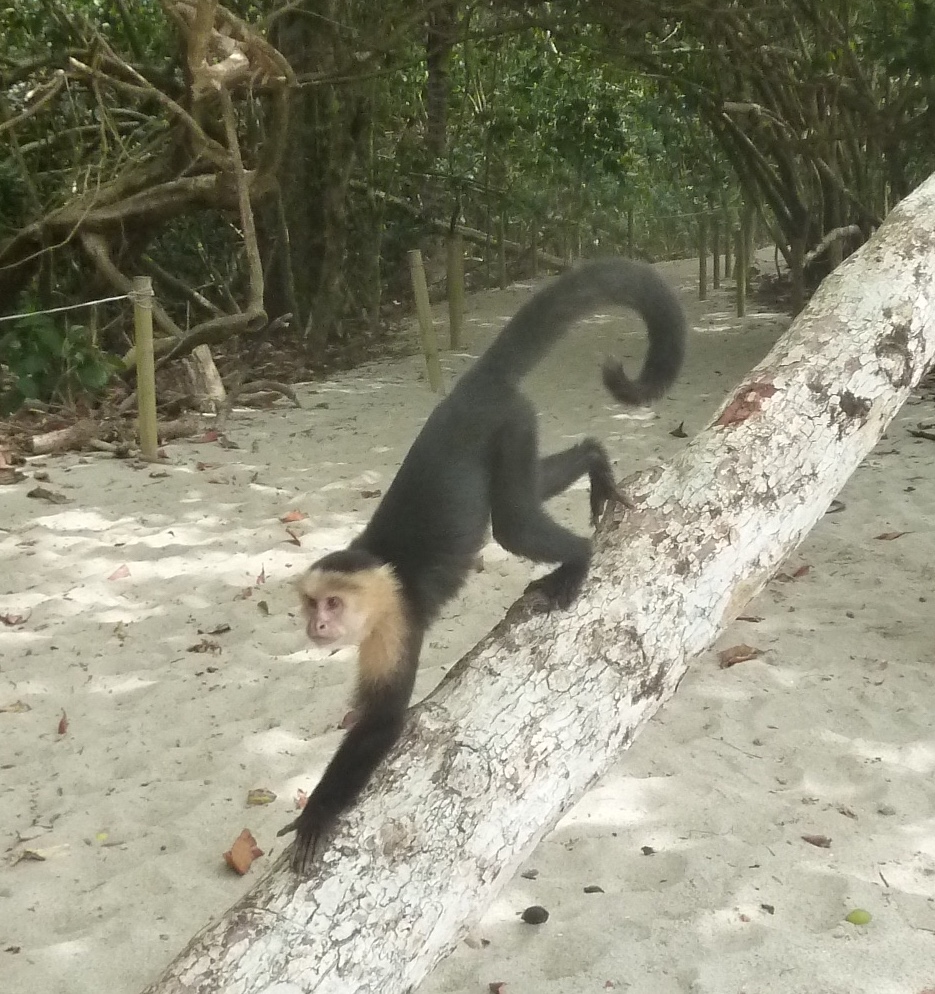
Along the way we saw and heard many a monkey. Howler monkeys make themselves loudly known whether you can see them or not.  Their grunts and roars are easily heard at anchor, far from their tree-top lounge chairs where they laze away their days.  Spider monkeys are not noisy but use their long limbs to range energetically through the forests above in search of food.  Don’t stand beneath them: you may get wet or worse!  Tiny little squirrel monkeys do the same but are the more endangered and you need to be luckier to get a sighting. Capuchin white-faced monkeys are often seen ranging on the forest floor.  They are clever and are known for their thievery, encouraged by stupid tourists who have previously succumbed to the temptation to feed them.

At Punta Quepos the vibe was like a mini Wreck Beach, but without the nudity.  From the street above there is a steep trail down to the beach, where vendors sell beer and drinks and delicious food is on offer.  Umbrellas are available to rent and Costa Ricans and tourists show up in equal numbers to enjoy lazy days spent on the beach.  Our access was by dinghy, but we trekked up the hill to enjoy the luxury of a meal pool-side and then a small provisioning run at the nearby neighborhood commercial area.  The curvy road from beach to town sweeps past many swish looking vacation villas that have been built into the steep hillsides overlooking the sea.  At night everyone goes home from the beach, leaving cruisers all alone at anchor to listen to a private concert of cicadas and monkeys.


Beautiful anchorage at the 'Wreck Beach' (clothing required) of Punta Quepos.

Around the corner is the Manuel Antonio Park.  Anchored there we took our dinghy and enjoyed the trails to ourselves before the hordes of tourists began being admitted at 8am.  Coatis and agoutis and bats were about, along with monkeys and sloths that we couldn’t see, hidden high up in the foliage.  Apparently, the sloths come from aloft once every 8 days to take a dump in the roots of their tree, then climb back up.  Why they do this is unknown and especially puzzling because predators such as puma and jaguar are known to take advantage of their moment of slothful ablution.


What happens when a tricky dingy surf landing tangles with the line of a parasailer?


Quiet reflection after a violent pitch into the sea.   Luckily, the dingy stayed upright even if Alice and Greg did not.

Uvita was a stop on the way to Drake Bay.  An unpleasant night was spent rolling and bouncing at anchor there.  At low tide the reef absorbs the swells but woe betides the high – then the swell rolls in over the reef and makes life miserable.  If you want to have a really lousy memory of a place all that is required is to combine a lumpy anchorage with a valve accident that emptied our full water tanks into the sea and then air-locked the water maker needed to refill them. Sweaty hours below were required to set things right.


Greg has bad memories of Uvita, but the stunning sunset and rising moon are Alice's fond memories.

Bahia Drake was a highlight reel of nature’s beauty.  Not being ourselves much in the way of naturalists, we chose to enjoy the experience assisted by tour guides for both water and land. First was a dive/snorkeling trip by boat to Isla del Cano.  Greg’s two dives at the island were simply spectacular displays of underwater life.  Huge schools of jacks, big and small, swirled in circles that envelope you swimming gracefully inches from your body and including you in their fantastic flying formations. On underwater rock spires that rise from a sandy bottom, moray eels lurked, lobsters hid in crevices, eagle rays glided by and white-tipped and bull sharks lingered on the sea-floor.  Tuna fish ripped above at high speed while stingrays nestled hidden in the sand below, their eyes and nostrils and the faint outlines of their bodies giving away their secret locations. It was a profusion of sea life. Triggerfish and grunts and snappers.  Wrasse, damselfish and parrotfish.  Boxfish, puffers and porcupinefish.  Lace coral and hawkfish.  Wow.


Snorkeling and dive trip to Isla del Cano.

The next day we went on a trip to Corcovado National Park, sleeping overnight in a tent at ranger station San Pedrillo.  We roared at 26 knots to our park landing beach near Sirena Ranger Station, stopping on the way to watch a very large school of mobular rays leaping up and splatting down by hundreds in a rhythmic visual symphony.


Spotting the wildlife thanks to Donny, our expert guide.


Overnight camping at San Pedrillo Ranger Station in Corcovado Park.


The young panga drivers were skilled at managing the gringos in and out of the tour boat.

Our guide Donny was of aboriginal descent and besides being friendly and fun to be around, he carried an encyclopedic knowledge of all things forest living.  The trip was in its way a repeat for Alice, as eight years previously she had hiked in 20km from the Golfito side of the park.  She had then flown out on a small plane from the grass strip at Sirena.  It turns out that a high accident rate has now closed that runway.  Small plane wreckage can be seen in 5 places around the strip, causing Greg to be impressed anew by his esposa intrĂ©pida.


The abandoned landing strip.

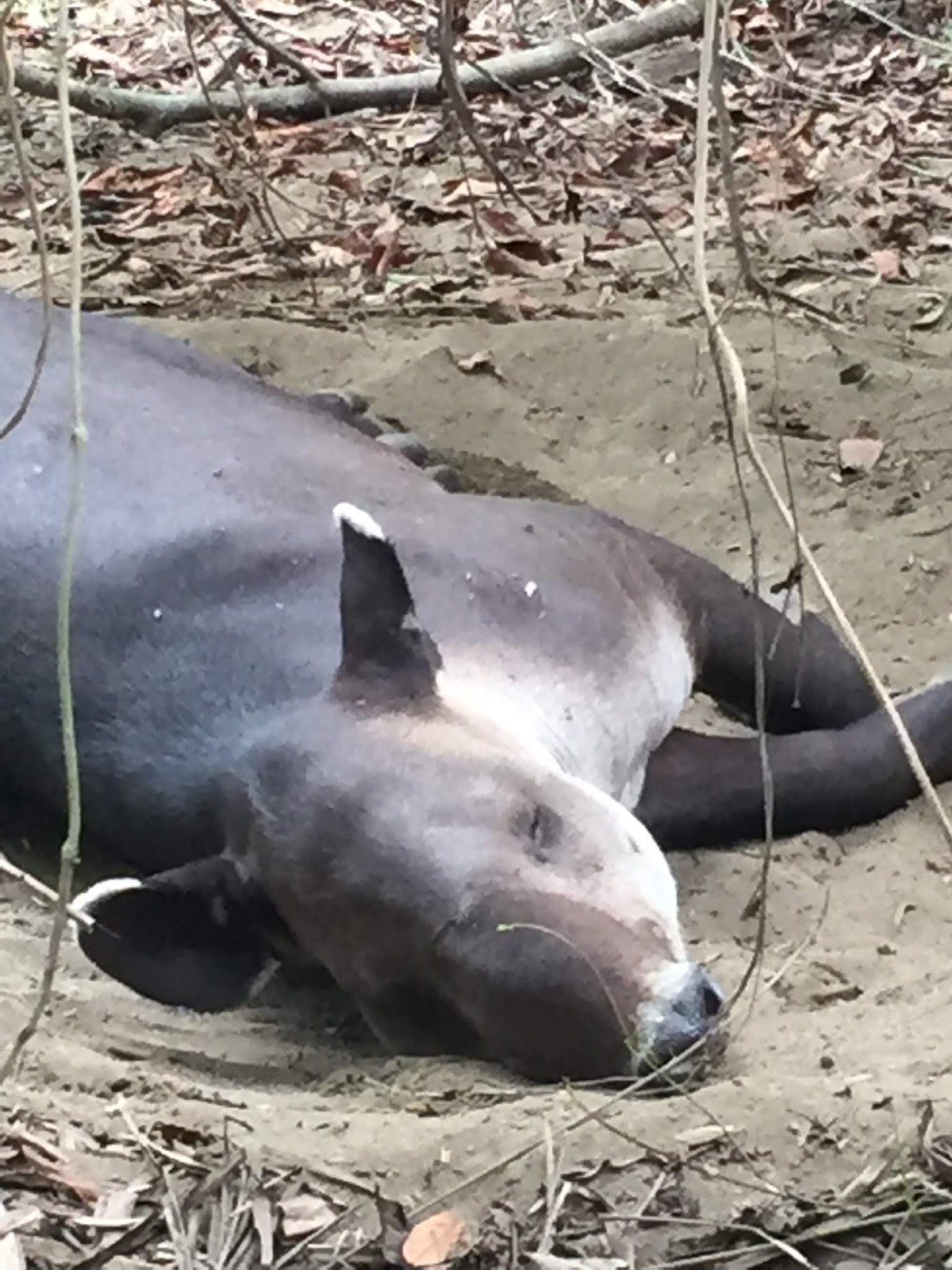
The profusion of life at sea was matched by that of the land.  Of plants and trees there was a jungle.  Of animals were numerous monkeys but also tapirs (similar to a pig), sloths curled up high in trees, agouti (like really weird looking rabbits), coatis (long nosed raccoons), and squirrels.  Of birds there were scarlet macaws, toucans, and other small birds of many colour (technical term for birds whose names we didn’t catch).  There were black hawks, falcons, turkey vultures, cormorants, egrets, herons, sandpipers and plovers, gulls and terns and grouse.  Lizards were many, small and large and there were dart frogs (toxic to touch and previously used by aboriginals to poison their weapon tips).  And insects: huge spiders with elaborate 3-dimensional webs capable of catching small birds, swarming wasps and bees and ants and termites and nasty tiny little ticks (perhaps the least favourite of all insects), along with the usual assortment of mosquitos and biting sand fleas to remind us that we humans can also be prey. 


Donny once killed one of these wasps, leaving the pheromone on his skin.    The entire hive chased him for miles (well maybe not miles)!


Invisible to us but roaming the jungle were huge jaguars and their smaller puma and ocelot cousins.  Snakes were few this time of year, for which in a way we were glad, though we would have loved to see a boa constrictor hanging from a tree.  Greg went for a cooling swim in the ocean and then was told it was a bad idea – crocodiles often range there out of the estuary.  Oops.  

Adding to the visual pleasures of a trek through exotic trails were other human animals.  We were accompanied on our explorations by a stunningly beautiful and smart-minded young 20ish Danish couple, living embodiments of blonde god and goddess.  They were youth in love and adventuring the world together.  Lucky them; lucky us: all alive in nature’s jungle.


The young Danish couple shelling coconuts.


Greg & Alice


Wednesday, 13 March 2019

His Touch, Destruction; His Smile, Delight


We arrived at Playas el Cocos on a Friday afternoon, hoisted a yellow flag, loaded our passports and boat docs into the dinghy and headed in to see the Port Captain and the Immigration office.  In Spanish, Cerrado means closed.  In this case, cerrado meant closed for the weekend.  Lucky for us, in Costa Rica they don’t believe in walls and no one cared at all that there were two undocumented illegal aliens in their country, roaming their streets, drinking their beer and eating up the food in their restaurants. 

Cocos is a northern hub of beach tourist hedonism, pretty much an “ask and ye shall receive” sort of place.  Scuba diving, zip lining, kite surfing, nature tours, you name it.  Compared to Nicaragua it also seemed very first-world, providing us with a dose of re-entry culture shock.  The weekend eventually came to an end and with it, a taste of Costa Rican bureaucracy. Our clearance requirements included the following order of “visitas de officinas,” each accompanied by a lengthy wait: First to the Officina de Capitania del Puerto, then up the street to the Officina de Immigracion, then back to the Capitania del Puerto, next up, a one-hour round trip cab ride to the Airport to complete our Customs Clearance. Then we returned to the Capitania del Puerto, and as any reasonable person would obviously expect, the following day paid yet another visit to the Capitania del Puerto. Leaving Cocos we were feeling very well documented indeed.

Next stop was Bahia Brasilito a gorgeous little bay a couple hours cruise south. Lovely sail, lovely bay all to ourselves, lovely sunset, great sleep, delicious breakfast, and do you remember “that guy”?  It turns out that thumbing your nose at gods is a really bad idea.  Leaving Brasilito we headed to Tamarindo and just as we were entering the anchorage, El Papagayo showed up. “You are not supposed to be here,” we said to him.  “Well here I am” said he and immediately gusted to 45 knots.  Sometimes sailing, especially when entering an anchorage, you can get stymied; what you want to do you simply can’t. When there is too much wind the thing to do is shorten or douse sails, which first requires heading upwind. Unfortunately, immediately in that direction was a dangerous underwater rock pile, so nope, not doing that. Oh look, there is a tear in the mainsail! Thanks, Papy, we’ll hold our course past the rocks and let the mainsail rip some more before we douse it, ok?  “Welcome to Bahia Tamarindo” said he, “I also know how much you like loud, windy anchorages so I’ve got you all set up for the night.”

In the morning we set out southward.  God’s reach only goes so far and according to all weather guidance, Papagayo turns into a shrivelled little worm if you get far enough south.  So we motor-sailed under jib alone while el Papagayo continued inflicting his fickle form of torment: just the right breeze, now nothing, now 40, now again nothing, and so on.

Bahia Corrillo was a nice little stop that after a short walk up a dirt road brought us to a french restaurant surprise. Chez Nous is themed in the bright colours of Gauguin and run by a couple of french fellows who ten years earlier had relocated from paradise in French Polynesia to a new one in Costa Rica.

Eventually we reached Bahia Ballenas and anchored in settled winds. A morning dinghy trip revealed Ballenas to be a bay of broken dreams.  Spalling concrete steps at the wharf led to the now abandoned Yacht Club, apparently once a happening place but now in a condition of sad dereliction.  A walk to the little town showed mostly closed restaurants and stores. Greg had hoped to play a game of golf but getting to the course required a 4 mile walk and there were no taxis.  Guessing that the effort would not be worth it anyway, we spent a rolly-polly night on the hook, the morning applying sticky-patch to the mainsail and left in the afternoon for the nearby Islas Tortugas.

With better weather, to a sailor comes a whole new attitude.  Snorkeling with the tour group swimmers and various colourful little fishes we began to appreciate Costa Rica’s abundant nature. After another short sail to the wildlife reserve at Bahia Curu, we anchored again.  Ashore was a view verdant with tropical greenery and promise for the day ahead.  Our plan was to rise early, take a nature trek and commune with lions, tigers and bears. 

There were none of those animals but there were crocodiles, white-face catuchins and howler monkeys, deer, birds of many feathers, coaties (they look a lot like racoons), a horse (wild?), and a startled snake on the trail that Alice, walking ahead, claimed was a fer-de-lance (instant death bite).

A need for fuel and provisions has now brought us to Bahia Herradura, where uber-rich types hang out at the marina in a harbour chock-full of ridiculously expensive 70 ft fishing machines.  Apparently, they hold monthly fishing derbies here where the prizes awarded to the winner can approach $1M USD.  Fishermen, especially rich ones, are capable of astonishing behaviour in search of their prey.  The marina here caters to such humans. We were slightly amused when the marina management treated us as some form of sea-going riff-raff, definitely not of the sort welcome here. Asking about the possibility of taking a few nights moorage at the marina, we were denied.  The truth is we probably wouldn't have been willing to pay their exorbitant price anyway. They did sell us fuel, so we were happy for that and are now anchored in the bay.

Greg & Alice


Arrived in Costa Rica


Anchorage at Cocos


Brasilito


A windy day at anchorage in Tamarindo.


Calm anchorage at Carrillo.


Scarlet Macaw in the French Restaurant.


Pool toy


Catching lots of fish but rarely ones that are good eating.


Rounding Cabo Blanco.


Cabo Blanco would be no fun to wash up on.


Fish wharf at Bahia Ballenas.


Derelict Costa Rica Yacht Club.


Tour boat looking at us, looking at them.


Banana boat at Islas Tortugas.


Beach at Curu.


Interesting shrine meaning what?


Aboreal termite nests stay still in one place and are easy to photograph.


Ceiba tree roots can scare people that are afraid of snakes.


Mangrove roots.


Bridge over crocodiles


Estuary to the sea


Los Suenos Marina at Herradura

Ass to Asshole and Away


Under sight of God, or at least the facsimile of him thereof, we waited and suffered his wrath.  In other words, while we were at anchor in San Juan del Sur it mostly blew like hell.  One day it blew so hard we could not leave the boat and had to babysit in case the anchor dragged.  Probably there was nothing to worry about.  Anduril is equipped with very good ground tackle.  For those of you not versed in boating lingo, that means our anchor and chain are all of good quality and unlikely to fail or break loose in a blow.  Still, when gusts are hitting 50, the wind is moaning in the rigging and the boat is tacking back and forth on the anchor line, heeling over hard enough that you have to brace yourself down below – at those moments into the mind creeps doubt.  So instead of doing a much looked forward road trip into Granada we babysat the boat.

When we felt resentful about being stuck on the boat in San Juan del Sur we could look out at the great Jesus statue on the hill and say him, that’s the one that is causing all this trouble.  That creature of many names: El Papagayo, Horned Man, La Banshee, Diablo.  Wait; say some, your iconography is backwards.  But if something can be praised it can also be criticised and we just aren’t the religious types.  No great god protects or punishes us, nor seeks our mortal souls. The truth, our truth, is that it is just the wind blowing.  Yet when the wind blows adverse, it is more fun to blame someone.  So we do. So we did.  We blamed El Papagayo. On Thursday morning the wind finally seemed reasonable enough for us to leave.

Another complication was that to leave San Juan del Sur we needed exit paperwork and the officials at the Port Captain’s office were helpful but confusing.  Authority figures, just like gods, can be that way. We visited the port captain’s office three times. An exit Zarpe was helpfully produced bearing the wrong date.  In truth, with the wind blowing we had no idea what date would actually be the correct one and we decided that no one would ever care about the date written on a Zarpe.  More troubling was the emphatic advice from one of the uniforms at the port captain’s office that we didn’t need an exit stamp in our passports.  That sounded wrong, but if the Man says it’s good, that’s good, right?  With Greg about to pull up the anchor Thursday morning, Alice expressed new doubts.  Our friend Pamela had sent a “be careful” message.  Alice decided we needed one more try at the port captain’s office to make sure. 

As it turned out, the better Man was actually a Woman.  Who would guess that hidden in a hallway of the local fish plant dock there is an immigration office.  The woman that worked there was friendly, competent and had a working computer.  She also had all important government issued stamps – official stamps for papers and official stamps for passports. Stamps are important down here.  Never forget it.

We did have some fun in San Juan del Sur.  A beaten up panga serving as water taxi roams the anchorage and is available to be waved down and to take you ashore.  The various drivers of this highly utilitarian boat are all ridiculously competent and in any weather whatsoever are able to effortlessly feather up to either dock or boat and let you on or off.  Ashore are restaurants and all manner of commercial services to tend to the various needs of attractive visiting swimwear-clad surfer dudes and alto-dudes. We were able to buy provisions. Provisions included bottles of wine.  Bottles of wine are also important down here.  Never forget it.

Everything important now having been attended to, we hoisted anchor and sail and pointed our bums to wind.  For sailors, bums-to-wind is always better than the alternative of faces-to-wind. Sailing away from the harbour, japing at El Papagayo on the hill, it was our bums that had the last word. 

The trip from Nicaragua into Costa Rica was a perfect and lovely five-hour, nearly 40 mile sail.  Rounding the headland of Cabo Santa Elena and weaving our way through the Islas Murcielagos, the winds were favourable, the seas were slight and until we approached our anchorage at Bahia Potrero Grande, we never even considered having to turn on the engine. Nice.  Maybe God was smiling at us after all.  Or maybe humans are ineffably stupid and superstitious.  Either way, sometimes it is a wonderful life.

Greg & Alice


Jesus on the hill at San Juan del Sur


Provisioning in San Juan del Sur.


View of San Juan del Sur anchorage when the winds are not howling.


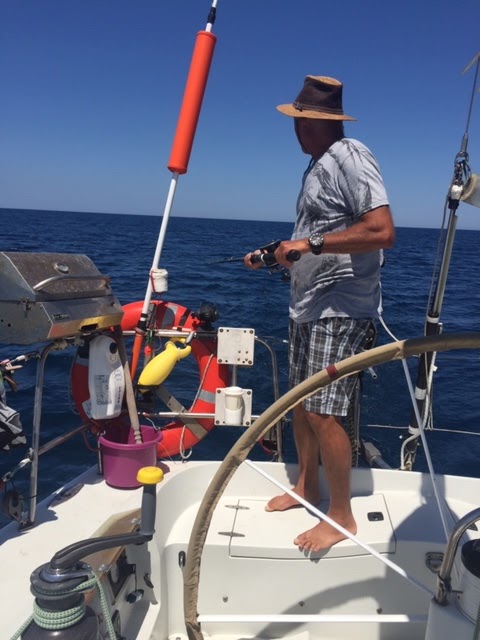
Greg looking hopeful.....we are escaping the Papagayo winds.


Alice looking hopeful.....we are escaping the papagayo winds.


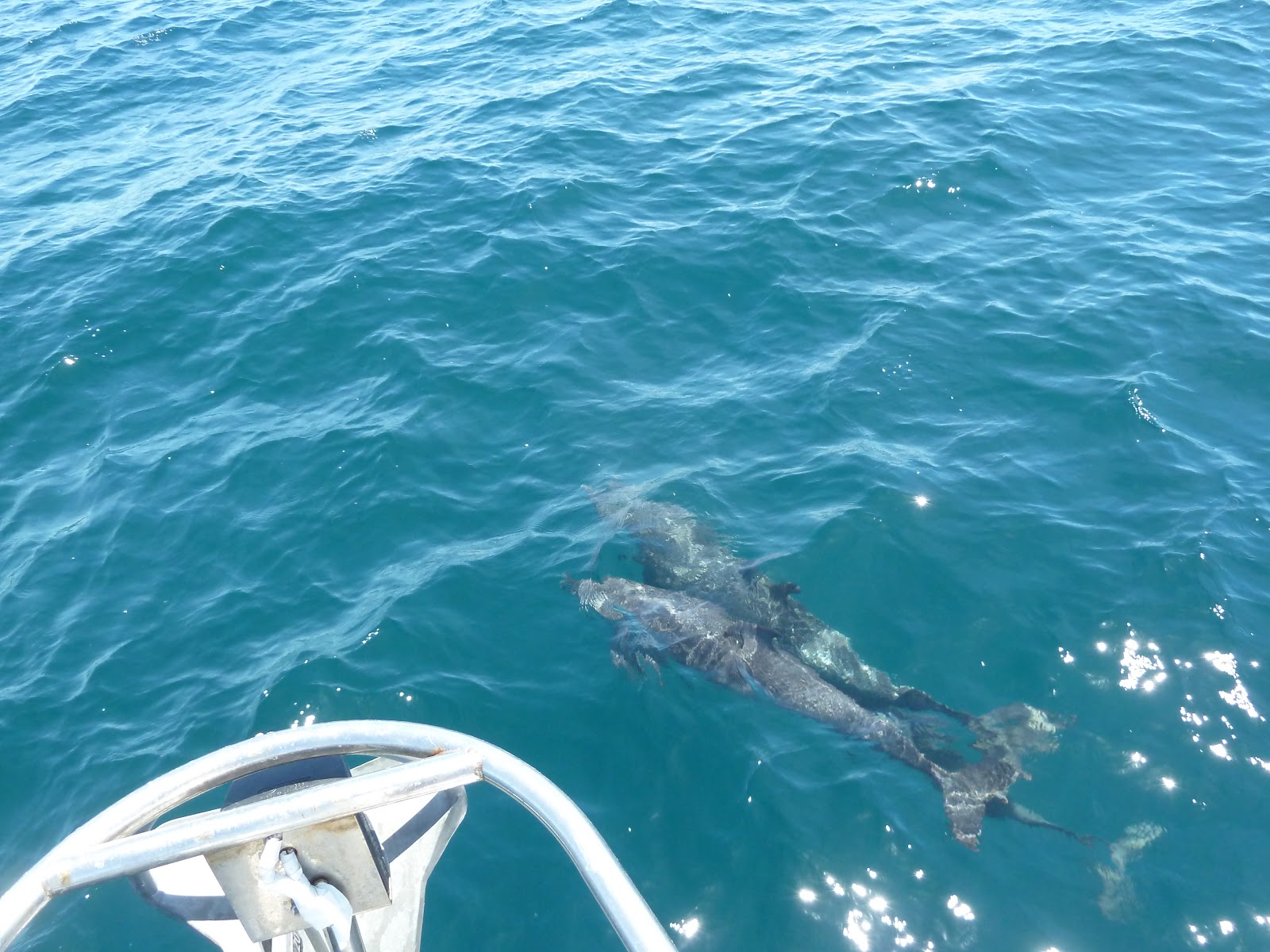
Dolphins having fun....escaping the papagayo winds with us.


Bahia Potrero Grande was our first anchorage in Costa Rica.   A calm and peaceful anchorage along a national park.


Bahia Potrero Grande